Wednesday, September 19, 2012
Folliculitis
Folliculitis
Localized inflammation of a hair follicle. The condition may be caused by infections, injury or irritation and is generally found on the face, neck, breast and buttocks. The damaged follicles are then infected with the bacteria Staphylococcus (staph).
The condition may be caused by staph aureus, yeast or fungi. If the condition spreads or becomes persistent swab cultures may need to be taken.
Lymphedema patients are more susceptible to skin infections and are strongly advised against hot tubs because of the possibility of contracting Pseudomona folliculitis. This is a resistant gram-negative bacterial infection with serious complications. Barber's itch is a staph infection of the hair follicles in the beard area of the face, usually the upper lip. Shaving makes it worse. Tinea barbae is similar to barber's itch, but the infection is caused by a fungus.
Pseudofolliculitis barbae is a disorder that occurs mainly in black men. If curly beard hairs are cut too short, they may curve back into the skin and cause inflammation.
Clinical:
Pus in the hair follicle
Irritated and red follicles
Damaged hair (possibly in growing back into the follicle)
Complications:
While we tend to think of folliculitis as a minor and superficial infection, it is important to remember that with a lymphedema limb that is immunocompromised, the folliculitis could develop into a more severe infection. Complications include cellulitis, forunculosis (This condition occurs when a number of boils develop under your skin. Boils usually start as small red bumps but become larger and more painful as they fill with pus), scarring, destruction of the hair follicle. Untreated and/or severe/deep folliculitis could result in sepsis and bacteremia.
Treatment:
Topical antibiotics which may include bacitracin, polymyxin B sulfate (Polysporin), clindamycin, erythromycin, or mupirocin (Bactroban). You may also use an antiseptic cleanser, such as povidone-iodine (for example, Betadine) or chlorhexidine.
Oral antibiotics based on the seriousness (deeper or more severe infections) of the folliculitis or on the underlying medical condition of the patient. If caused by a bacteria, your doctor may prescribe dicloxacillin, erythromycin, or cephalexin (such as Keflex). Ciprofloxacin (Cipro) and ofloxacin (such as Floxin) are used for certain types of bacteria.
Fungus based folliculitis is treated with antifungal oral medications which include You will need to take antifungal pills, such as fluconazole (Diflucan), griseofulvin (Fulvicin-U/F or Gris-PEG, for example), itraconazole (Sporanox), or terbinafine (Lamisil).
Full Text Page

Erysipelas
Erysipelas
Key Words: Strep A, Lymphedema, Cellulitis, Bacteremia, Septicemia, Cutaneous lympatics, immunocompromised, St. Anthony's Fire, Staph aureus, Strep G, Penicillin, Probenecid, Dicloxacillin, Erythromycin, Keflex, Augmentin, Necrosis, Gangrene, Thrombophebitis, Bacterial endocarditis, Soft tissue infections
Discussion
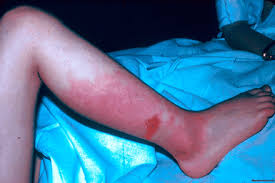
Erysipelas (also called St. Anthony's Fire)is a superficial bacterial skin infection skin generally caused by (Strep A bacteria or Strep B bacteria. It can spread with alarming rapidity as it invades the cutaneous lymphatics.
While some classify it as a "form of cellulitis," it actually can be differentiated by the clear lines of demarcation of the infection. Symptoms include marked lines of infection, fever, pain, an overall achy feeling and swollen lymph nodes. Most cases involve the legs, and the second largest number of cases involve the face. However a delay in treatment can result in deeper cellulitis or lymphangitis.
Like any type of infection a lymphedema patient experiences, antibiotic treatment needs to start immediately so as to prevent septicemia or bacteremia. As with any infection erysipelas present a serious threat due to the immunocompromised state of the lymphedemous limb and because possible fibrosis handicaps effective antibiotic therapy. Also, in lymphedema patients Staph aureus (not Strep A) has been implicated as the infective bacteria.
While very similar and often confused with actual cellulitis it can be differentiated by the raised borders and advancing edges. The most commonly affected body areas are the legs, followed by the face.
Risk Factors
There are a number of factors that might predispose one to erysipelas. The primary cause of course is a break, cut or entry foci in the skin and subsequent infection usually by a Strep A bacterium. Susceptibility factors include edema, lymphedema, venous insufficiency, venous stasis, dermatosis, diabetes, HIV infection, and other immunocompromising medical conditions.
Transmission factors include port of entry through nasal cavity, insect bites, cut, incisions.
Symptoms
The infection may start out as a inconspicuous small red patch and spread rapidly to a painful fiery red plaque. The infection area will be warm or hot and quite tender. Over-all body symptoms might include feeling unusually drained of energy, achiness, chills, fever and malaise. There may also be blisters on the infected area and possible red streaking.
Treatment
Treatment generally will involve the administration of an oral antibiotic. The infection responds well to penicillin based antibiotic. In addition Probenecid may be used as it increase the effectiveness of penicillins. For more resistant infections dicloxacillin may be used. Other antibiotics may include Nafcillin, Erythromycin, Keflex and Augmentin.
Depending upon the severity and spread IV antibiotic therapy may also be used for lymphedema patients. Also, limiting one's activity with limb elevation is standard protcol.
Blood cultures and/or wound cultures may be needed to determine the exact bacteria involved.
Complications
Complications may include bacteremia or septicemia, abscess, tissue necrosis (gangrene)in the most severe cases, thrombophlebitis, bacterial endorcarditis.
Prognosis
Prompt diagnosis and treatment will bring favorable results and in all but a very few patients recovery will be complete and without complications. At risk groups, including those with lymphedema may experience recurrent episodes.
Full Text

Key Words: Strep A, Lymphedema, Cellulitis, Bacteremia, Septicemia, Cutaneous lympatics, immunocompromised, St. Anthony's Fire, Staph aureus, Strep G, Penicillin, Probenecid, Dicloxacillin, Erythromycin, Keflex, Augmentin, Necrosis, Gangrene, Thrombophebitis, Bacterial endocarditis, Soft tissue infections
Discussion
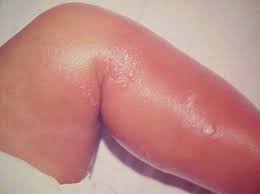
Erysipelas (also called St. Anthony's Fire)is a superficial bacterial skin infection skin generally caused by (Strep A bacteria or Strep B bacteria. It can spread with alarming rapidity as it invades the cutaneous lymphatics.
While some classify it as a "form of cellulitis," it actually can be differentiated by the clear lines of demarcation of the infection. Symptoms include marked lines of infection, fever, pain, an overall achy feeling and swollen lymph nodes. Most cases involve the legs, and the second largest number of cases involve the face. However a delay in treatment can result in deeper cellulitis or lymphangitis.
Like any type of infection a lymphedema patient experiences, antibiotic treatment needs to start immediately so as to prevent septicemia or bacteremia. As with any infection erysipelas present a serious threat due to the immunocompromised state of the lymphedemous limb and because possible fibrosis handicaps effective antibiotic therapy. Also, in lymphedema patients Staph aureus (not Strep A) has been implicated as the infective bacteria.
While very similar and often confused with actual cellulitis it can be differentiated by the raised borders and advancing edges. The most commonly affected body areas are the legs, followed by the face.
Risk Factors
There are a number of factors that might predispose one to erysipelas. The primary cause of course is a break, cut or entry foci in the skin and subsequent infection usually by a Strep A bacterium. Susceptibility factors include edema, lymphedema, venous insufficiency, venous stasis, dermatosis, diabetes, HIV infection, and other immunocompromising medical conditions.
Transmission factors include port of entry through nasal cavity, insect bites, cut, incisions.
Symptoms
The infection may start out as a inconspicuous small red patch and spread rapidly to a painful fiery red plaque. The infection area will be warm or hot and quite tender. Over-all body symptoms might include feeling unusually drained of energy, achiness, chills, fever and malaise. There may also be blisters on the infected area and possible red streaking.
Treatment
Treatment generally will involve the administration of an oral antibiotic. The infection responds well to penicillin based antibiotic. In addition Probenecid may be used as it increase the effectiveness of penicillins. For more resistant infections dicloxacillin may be used. Other antibiotics may include Nafcillin, Erythromycin, Keflex and Augmentin.
Depending upon the severity and spread IV antibiotic therapy may also be used for lymphedema patients. Also, limiting one's activity with limb elevation is standard protcol.
Blood cultures and/or wound cultures may be needed to determine the exact bacteria involved.
Complications
Complications may include bacteremia or septicemia, abscess, tissue necrosis (gangrene)in the most severe cases, thrombophlebitis, bacterial endorcarditis.
Prognosis
Prompt diagnosis and treatment will bring favorable results and in all but a very few patients recovery will be complete and without complications. At risk groups, including those with lymphedema may experience recurrent episodes.
Full Text
Wednesday, August 29, 2012
What are fungal infections of the nails
What are fungal infections of the nails?
Fungal infections of the nails are common. The fungus grows in the nail bed, where the nail meets the skin. The fungus grows slowly and does not spread to internal organs. The main concern is the nail discoloration (usually yellow) and change in nail texture and growth. Nails can become crumbly, break easily, and grow irregularly. But because other nail conditions can mimic fungal infection, most doctors will confirm the diagnosis by sending a nail clipping for laboratory evaluation – especially if treatment is being considered.
Fungal infections are not commonly contagious or spread easily between people. The fungus grows in people whose bodies “allow” the fungus to become established without mounting an immune response to suppress the fungus. We know of no ways to boost your immune system to make fungal infections less likely. You may be able to prevent fungus infections by:
Keeping your feet dry, avoiding constant moisture
Avoid non porous, closed shoes made of synthetic materials
Wearing absorbent socks
Wearing water proof sandals when in public showers
What can be done about fungal nail infection?
Because the fungus grows slowly, it is hard to eliminate. The anti fungal medications that eliminate the fungus are strong, must be taken by mouth, and must be taken conscientiously for months in order to be effective. Each drug has potential side effects on other body organs (especially the liver, skin, or bone marrow). To monitor for side effects, periodic blood testing must be obtained, usually monthly, during the time you take the medication. Any symptoms suggesting organ damage should be reported immediately to your physician, such as: unusual fatigue, severe loss of appetite, nausea, yellow eyes, dark urine, pale stool, skin rashes, bleeding, enlarged lymph glands, or signs of infection.
Unfortunately, anti fungal creams applied directly to the nail cannot penetrate the nail bed to kill the fungus at its source, so they are not usually effective.
How effective are the medications at curing the fungus?
The anti fungal medications usually suppress the nail infection when taken as directed. Unfortunately, they cannot guarantee permanent cure. At least 1 in 5 patients (20%) and probably more will have a recurrence of the original nail infection at some time, and re-treatment with medication would be necessary.
Should I take medication to treat my fungal nail infection?
Doctors usually recommend treating fungal nail infections only when such infections cause secondary problems, like pain, recurring ingrown toenails, or secondary bacterial infections of the nails or skin. If the nail infection causes no symptoms, then doctors often will discourage treatment because of the potential side effects, the need to monitor the blood throughout therapy, and the high recurrence rate. Patients with liver or heart disease generally should not take these medications.
Some insurance companies require documentation of secondary problems beyond the mere presence of the fungal infection before they will cover the costs of the anti fungal medications.
April 2002
Acknowledgment and Thanks
Four Key Features of a Fungus
Four Key Features of a Fungus
1.) Fungi are a kingdom consisting entirely of absorptive heterotrophs. In contrast to certain bacteria and autotrophic plants, they need pre-formed organic compounds as energy sources, and as carbon sources for cellular synthesis. Fungi characteristically live embedded in some form of food substrate where they absorb simple, soluble nutrients through the wall and cell membrane. In many cases, these simple nutrients may be released from more complex polymers by depolymerases that are secreted into the external medium. It is therefore unlikely that there is a substrate anywhere in the world that a fungus cannot utilize or benefit from. It should be noted the cell wall of the fungi prevents food being engulfed by phagocytosis.
2.) Fungi usually are filamentous, with the single filaments being termed hyphae. Fungal hyphae grow and branch to produce a network of filaments which constitutes the mycelium. The mycelium enlarges by extension of single hyphae which show polar growth, meaning they grow only at their extreme tips. This apical growth is in contrast to the intercalary growth of most other filamentous organisms. Expansion of the mycelium is continuous if the hyphae can keep on extending on the medium they are residing in. However, changes do take place as the mycelium ages and as that part of the food source on which it is growing is no longer able to provide sufficient nutrients. It should be noted here that though many fungi are hyphae in character, with an indeterminate mycelium capable of producing the largest of organisms, there are actually five major body forms in the kingdom.
3.) Fungi can reproduce by both asexual and sexual means. Reproduction is invariably connected to the production of spores, produced at specialized structures and fully equipped to start a new colony independent of the parent mycelium, and usually some distance from it. Fungal spores vary enormously in shape, size and other special properties, linked to their numerous roles in dispersal or survival.
4.) Fungi are all eukaryotic. This means they have a membrane-bound nucleus containing several chromosomes (unlike a circular strand of DNA found in prokaryotes), and a number of membrane-bound organelles including mitochondria and vacuoles. Eukaryotes also contain DNA that includes non-coding regions entitled introns, and ribosomes of the 80S type, contrary to the 70S type found in prokaryotes.
In summary, fungi are a kingdom of heterotrophic absorptive eukaryotes which probably arose from a choanoflagellate like protozoan by the origin of beta-glucan/chitin walls, with the simultaneous loss of phagotrophy. Multiple losses and origins of complex characters would have occurred since then, including major changes in wall chemistry, sometimes totally losing the whole vegetative wall. Fungi are ordinarily aerobic, having mitochondria with flat cristae and peroxisomes, the latter giving yeasts some of their chemical virtuosity. The 'true' fungi consist of the phyla Chytridiomycota, Zygomycota, Ascomycota and Basidiomycota, each sharing important morphological and biochemical features, such as walls typically containing chitin. Fungi are restricted to a monophyletic lineage, the closest relatives to these true fungi being the Choanoflagellates, a group ancestral to multicellular animals too. The true fungi display evident evolutionary trends with respect to their colony structure, ecological relationships, cell form, life cycle and sexuality.(1)
(1) World of Fungus
Lymphedema and Preventing Fungal Infections
Lymphedema and Preventing Fungal Infections
Not every infection we get as lymphedema patient is due to a bacterial "invasion."
We can also very quickly come down with a fungal infection. Due to the immunocompromised condition of the lymphedema limb, this fungus may literally explode over the limb before we even know what hit us.
It is critical that we know:
How to Prevent Fungal Infections
Not every infection we get as lymphedema patient is due to a bacterial "invasion."
We can also very quickly come down with a fungal infection. Due to the immunocompromised condition of the lymphedema limb, this fungus may literally explode over the limb before we even know what hit us.
It is critical that we know:
How to Prevent Fungal Infections
Getting rid of a fungal infection is not all that difficult. Your doctor may decide to scrape a small amount of the irritated skin or clip off a piece of hair or nail and look at it under a microscope. Once your doctor knows what kind of infection you have, there are special antifungal creams and shampoos that can help to get rid of it. Sometimes the doctor will prescribe a medicine to take by mouth for many weeks. Make sure you take the medicine for as long as the doctor tells you.
Maybe fungal infections can't be avoided altogether, but there are some ways you can help yourself ward them off.
Walk away from athlete's foot by following these simple steps:
Wash your feet everyday.
Dry your feet completely, especially between your toes.
Wear sandals or shower shoes when walking around in locker rooms, public pools, and public showers.
Wear clean socks and if they get wet or damp, be sure to change them as soon as you can. Use a powder (talcum or antifungal) on your feet to help reduce perspiration.
You may love to play sports and not be able to avoid jock itch, but you can help to keep it away when you:
Wear clean, cotton underwear and loose-fitting pants.
Keep your groin area clean and dry.
Yeast infections can be avoided, too, if you:
Don't hang out in wet swimsuits; change as soon as possible. Wear clean, cotton underpants.
The truth is there may always be a “fungus among us,” but we can make it a lot tougher for them to invade and grow!
Reviewed by: Patrice Hyde, MD Date reviewed: November 2000
Acknowledgment and Thanks Kids Health What are the different types of fungal infection?
When it comes to human body, the term fungus refers to a type of germ that lives on all of us. This germ harmless most of the time, can cause problems occasionally. This is called a fungal infection. Persistent fungal infections may be indicators of an imbalance in the body's microflora (the small, usually bacterial, inhabitants of gut,skin surfaces and mucous membranes).
Also, from AOCD Dermatologic Disease Database
1. Use the medicine completely and as recommended. The fungus may till be present long after it is no longer visible as a rash.
2. Keep feet clean, cool and dry. Change socks. Wear shoes that “breathe” like leather, rather than plastic.
3. Make sure shoes fit correctly and are not too tight.
4. Apply an anti-fungal cream, like Lotrimin or Lamisil, or a prescription antifungal cream to the bottom of the feet, and on the nails, about twice a week. This may help prevent early re-growth of the fungus. In some cases, an oral medication may be prescribed.
5. Avoid walking barefoot, especially in bathrooms, locker rooms, gyms, on carpeting, and in public bathing areas. Wear slippers or stand on a towel or piece of paper.
6. Keep toenails short, cut straight across and avoid ingrown nails. Do not use the same clippers on abnormal nails and normal nails.
7. Family members and close personal contacts should treat any fungus infections they may have to avoid trading back and forth.
8. Apply an anti-fungal powder, like Zeasorb-AF to the shoes every day, to keep spores from growing.
9. Discard old shoes, boots, slippers and sneakers. Do not share footwear with others.
10.If one has had a body fungus, in the groin or elsewhere on the skin, consider using an anti-dandruff shampoo, like Selsun Blue on this area twice a month. Lather up and leave it on the skin for about five minutes, then wash off completely. In some cases a preventive medication may be prescribed.
Monday, March 5, 2012
Hizentra Cuts Infections in Immune Disorders
Hizentra Cuts Infections in Immune Disorders
Mar 4, 2012
By Nancy Walsh, Staff Writer, MedPage Today
Reviewed by Robert Jasmer, MD; Associate Clinical Professor of Medicine, University of California, San Francisco.
ORLANDO -- Subcutaneous immune globulin (Hizentra) remains safe and effective up to two years in the treatment of patients with primary immunodeficiency diseases, researchers reported here.
The overall rate of infections was 2.4 per patient-year (95% CI 1.9 to 2.9) among patients receiving once-weekly infusions of the subcutaneous immune globulin, according to Robert P. Nelson, Jr., MD, of Indiana University in Indianapolis, and colleagues.
And the rate of serious bacterial infections was 0.06 per patient-year, which consisted of two cases of bacterial pneumonia, the researchers reported in a poster session at the annual meeting of the American Academy of Allergy, Asthma, and Immunology.
Conventional therapy for conditions such as common variable immunodeficiency or X-linked agammaglobulinema has been monthly infusions of intravenous immune globulin.
The treatment is needed lifelong to prevent patients from recurrent bacterial infections and chronic pulmonary disease.
In a previous shorter-term study (52 weeks), the subcutaneous route of delivery was associated with fewer systemic adverse events than the intravenous formulation.
"The weekly subcutaneous treatment leads to stable serum IgG levels, and smooths out the peaks and troughs," Nelson told MedPage Today during a poster session.
To assess longer-term outcomes, he and his colleagues followed 21 patients from four U.S. centers from 11 to 104 weeks. Most patients were white women, and their mean age was 42.
Patients who had lymphoid malignancies, hypoalbuminemia, and proteinuria were excluded from the study.
Maximum infusion rates were 35 mL/h (one pump) or 70 mL/h (two pumps) with the maximum volume being 40 mL/site (≤4 sites/infusion). Premedication was not given.
]Most infusion were given at home and self-administered. The median duration of treatment was 87 weeks.
Five patients withdrew but only one because of an adverse event, which was thyroid cancer unrelated to treatment.
Adverse event and local reaction rates were similar among subjects infused at low (<35 mL/h), medium (35-50 mL/h), and high (>50-70 mL/h) rates.
The most common infections were sinusitis, nasopharyngitis, bronchitis, and upper respiratory tract infections.
The annual rate of school or work days lost because of infection was 4.3 per patient-year, while the rate of hospitalized days was 0.55 per patient-year.
The rate of days on antibiotics for prophylaxis or treatment was 84 per patient-year.
Mean serum IgG levels remained steadily in the range of 11.71 g/L and 12.76 g/L throughout the follow-up period.
Treatment-related adverse events occurring within 72 hours of the infusion included headache, at an incidence of 0.004 events per patient-year, and fatigue, at a rate of 0.005 per patient-year.
Headache tends to occur more frequently with intravenous administration, the investigator said.
No patients experienced oropharyngeal pain or had an increase in creatinine.
Infusion reactions were similar regardless of whether patients had low, medium, or high infusion rates.
The rate of any temporally associated, treatment-related adverse events was 0.013 per patient year, which was "substantially lower" than in a previous study (0.034), despite higher mean infusion rates being used in this longer follow-up trial, Nelson reported.
Patient satisfaction was high, with overall scores on measures of health being close to those reported by healthy individuals, and there was no clinically significant deterioration in health-related quality of life.
FDA approves breath test to determine bacterial infection in kids Read more: http://www.foxnews.com/health/2012/02/28/fda-approves-breath-test-to-det
FDA approves breath test to determine bacterial infection in kids
Read more: Fox News
U.S. health regulators have approved Otsuka America Pharmaceutical's breath test to detect bacterial infection that causes stomach inflammation and ulcer, for use in children aged 3 to 17 years.
A press release from the U.S.Food and Drug Administrationsaid BreathTek UBT was the first breath test to detect Helicobacter pylori bacterial infections in children.
Rockville, Maryland-based Otsuka America, a unit of Japan's Otsuka Holdings Co Ltd, was granted approval to market its breath test for use in adults in 1996.
"Results from this test, when considered with a physician's assessment of thepatient'shistory, other risk factors, and professional guidelines, can quickly indicate infection," the FDA release said.
U.S.Centers for Disease Control and Prevention estimate that about two-thirds of the world's population is infected with Helicobacter pylori, which increases the risk of developing gastric cancer and a type of lymphoma.
Subscribe to:
Posts (Atom)
